In the news, I’ve come across recent national data that shows a concerning trend: fewer Canadians are donating to charities, and fewer are volunteering their time. According to analysis from the Fraser Institute (including its Generosity in Canada 2025: The Generosity Index report) and newly released findings from Survey of Giving, Volunteering and Participating, 2023, participation in both financial giving and volunteering has been steadily declining over the past decade, with additional drops over the last few years.
This conversation is especially important for us at Eli’s Place, as our mission is to create a rural, residential therapeutic community for young adults aged 18–35 who are struggling with serious mental illness.
This matters because charitable organizations rely on broad participation to function sustainably. At a time when community needs are rising, the ways people give their time, expertise, and resources have never been more important.

What the data is really telling us
The decline we’re seeing is not just about dollars. It’s also about participation.
Fewer people are involved in charitable giving and volunteering overall, and support is becoming increasingly concentrated among a smaller group of donors and volunteers. Economic pressures, burnout, and competing responsibilities all play a role. But when fewer people participate, charities are being pushed to do more with less, and the communities in need feel the impact.
Why donors and volunteers are essential
Charities are built by people – with their belief and dedication.
Donors provide the financial stability needed to plan responsibly, deliver programs, and grow. Volunteers extend capacity, contribute insight, and help organizations stay connected to the communities they serve, all while raising awareness. Together, they make long-term impact possible.
In mental health work especially, stability and continuity are crucial. Every contribution, whether it’s time, money, or expertise, helps ensure support is available when people need it most.
Why this work is personal to me
My belief in volunteering and commitment to donating comes from lived experience.
As someone who has, at different points in my own life, navigated OCD, anxiety, and depression and ultimately received treatment at two residential treatment centres, I directly benefited from the volunteerism and donations of others. I also experienced the opposite, periods without access to appropriate treatment and support, spent waiting for services because organizations were constrained.
Those experiences taught me that the contributions donors and volunteers make give charitable organizations the capacity to offer expanded programming and sustained support, and that this capacity can profoundly affect individuals and their recovery when they need it most. This is why I believe addressing declining participation is crucial as we work to open the doors of Eli’s Place.
Later, when I was able to, I chose to volunteer, not out of obligation but out of understanding. Being on the receiving end of generosity changes how you see its value. Volunteering became a way to stay connected to purpose for me, and to stay involved in a community that provided me support. My involvement with Eli’s Place began on the fundraising committee, where I worked on annually recurring events such as Film Night, the TCS Toronto Waterfront Marathon, and Match for Hope, among others. I am now proud to be serving as a member of the Board.
The often-overlooked impact of pro bono support
Volunteering doesn’t always look like traditional service roles. Some of the most powerful forms of support we’ve received at Eli’s Place are pro bono and deeply discounted professional services.
We’ve benefited from expertise ranging from real estate services to clinical experience insights, as well as strategic, operational, and advisory support. This generosity allows us to access knowledge that would otherwise be out of reach and helps accelerate progress toward opening a safe, effective, life-changing facility.
These contributions are not peripheral, they are foundational.
The many ways people show up at Eli’s Place
One of the strengths of Eli’s Place is the breadth of community involvement behind it.
In addition to our Board of Directors, who are also volunteers, we currently have approximately 40 volunteers contributing their time and expertise. These individuals are community members who have stepped forward to support every aspect of the push to get Eli’s Place open.
Standing and informal committees
Community members sit on all of Eli’s Place’s standing committees, alongside board members, including:
- Communications, Finance, Fundraising, Model and Program Evaluation, and Governance
We also have task groups and councils including:
- Site Search and Development, Government Relations, Peer Advisory, and Professional Advisory
In addition, ad hoc committees are formed as needs arise — most recently, the Site Approval Committee — bringing together focused expertise to move critical work forward.
Alongside committee work, we rely on ad hoc volunteers who support specific projects and needs as they emerge. This flexible, community-driven model has been essential to our progress.
Growing participation as Eli’s Place grows
As Eli’s Place transitions from vision to operation, the opportunities to support this life-changing centre will continue to expand.
It’s my hope that our donor and volunteer base grows proportionally with our desire to help those in need.
Accessible ways to get involved
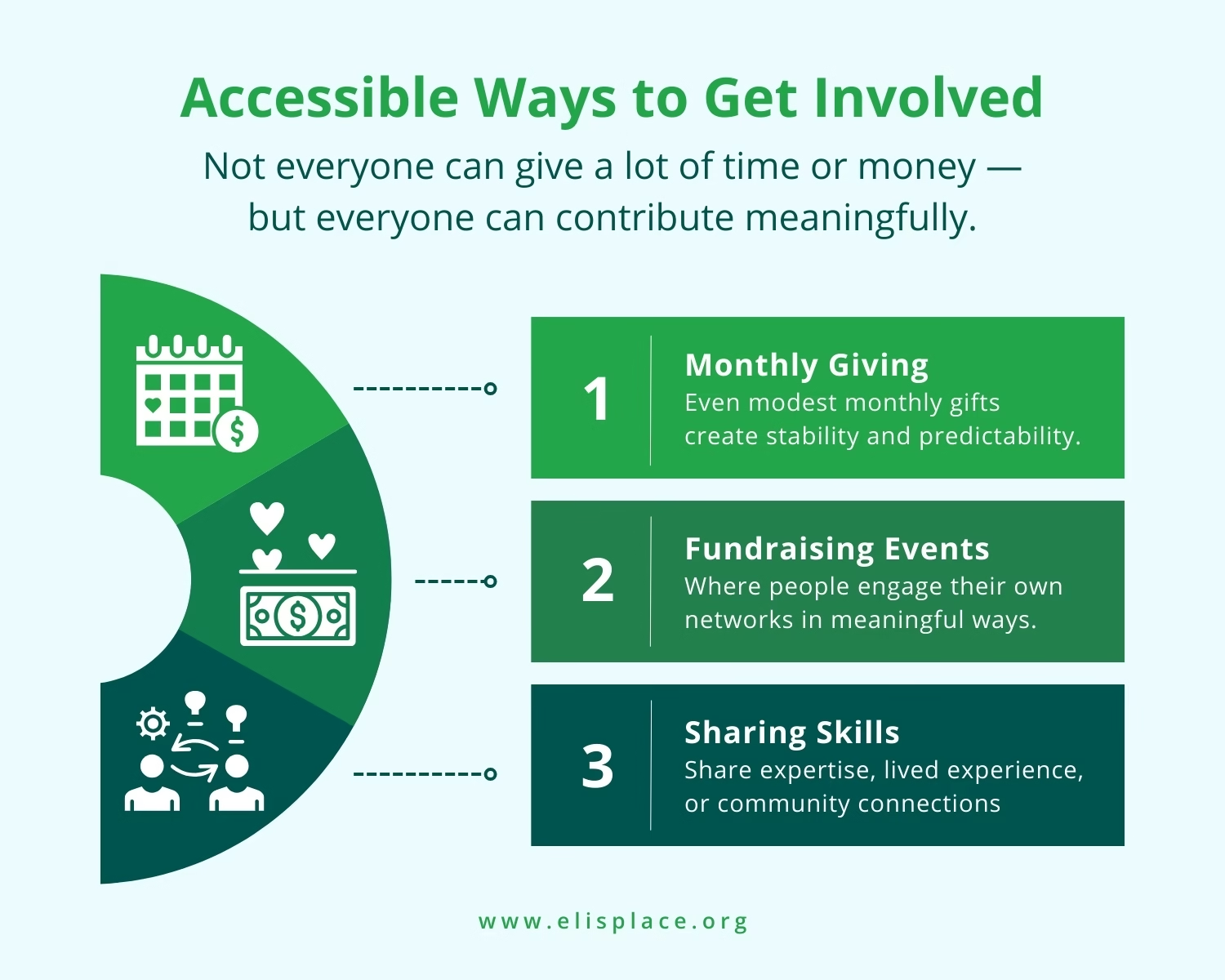
I understand not everyone can give large amounts of time or money – but everyone can contribute in a meaningful way.
Some of the most effective options include:
- Monthly giving, even in modest amounts, which provides stability and predictability
- Third-party fundraising events, where individuals or groups engage their own networks in meaningful ways
- Sharing professional expertise, lived experience, or community connections
Small, consistent acts of generosity, financial or otherwise, add up. As Eli’s Place grows, we aim to offer meaningful opportunities where community members can feel welcomed, valued, and supported in contributing in ways that fit their lives.
A shared responsibility for a shared future
The decline in giving and volunteering isn’t just a sector-wide challenge, it’s a community one.
Eli’s Place exists because people have shown up — donors, volunteers, and professionals alike offering their skills generously.
I am deeply grateful to everyone who has contributed so far, and I look forward to building what comes next — together.

Mike Greenspan | Eli's Place Board Member
Michael brings lived experience and over five years of volunteering at mental health organizations, including his current role as a trained peer support facilitator at the Frederick W. Thompson Anxiety Disorders Centre. With a background in community engagement and mental health advocacy, he offers insights grounded in lived experience and is connected to the community Eli’s Place will serve. Michael is passionate about improving the continuum of care and reducing stigma, and is committed to strengthening collaboration between clients, peers, and clinicians to create sustainable pathways to mental health recovery in Canada.