
For many people experiencing mental health emergencies, the hospital ER becomes the first place they turn. Hospitals play a critical role when someone is unsafe, overwhelmed, or in need of urgent assessment and stabilization. However, the growing reliance on emergency departments indicates a deeper, systemic issue. Too many people are reaching a crisis before they can access care.
Across Ontario, mental health-related emergency department visits continue to rise, with mental health-related ER visits increasing by more than 11%. Behind that number are individuals and families who may have been trying to find help long before they arrived at the hospital. When early support is unavailable, distress can escalate until hospital care becomes the only remaining option.
While hospitals are essential in a mental health crisis, emergency care is not recovery. That distinction matters.

What Drives Mental Health ER Visits?
Mental health emergencies can look different from person to person. They may involve anxiety or depression that has become unmanageable, led to self-harm, suicidal thoughts, psychosis, substance use, or a combination of concerns that have reached a point of crisis. For young people, anxiety has become a major driver, with Ontario data showing it among the most common reasons for youth mental health emergency visits.
Knowing when to go to the hospital can be difficult, especially when someone is unsure whether their symptoms are “serious enough.” Emergency care is appropriate when a person may hurt themselves or someone else, is experiencing psychosis or extreme distress, or cannot safely care for themselves. Understanding when to go to the ER and recognizing the threshold of an immediate mental health emergency empowers families to act swiftly when safety is at risk.
Once someone arrives, the focus is stabilization. Hospital stays are shaped by the urgency of the crisis, the person’s clinical needs, available beds, and what support may be needed after discharge. Illness severity and social supports can influence how long psychiatric inpatient stays may last, and ultimately, a patient’s discharge depends entirely on establishing baseline safety, stability, and a clear plan for next steps.
The Growing Impact of Mental Health Emergencies on Young Adults
Young adulthood is supposed to be a time of building a life. It is when people begin imagining who they want to become, testing independence, and finding where they belong. When a serious mental health crisis interrupts that process, the effects can reach far beyond the emergency visit itself.
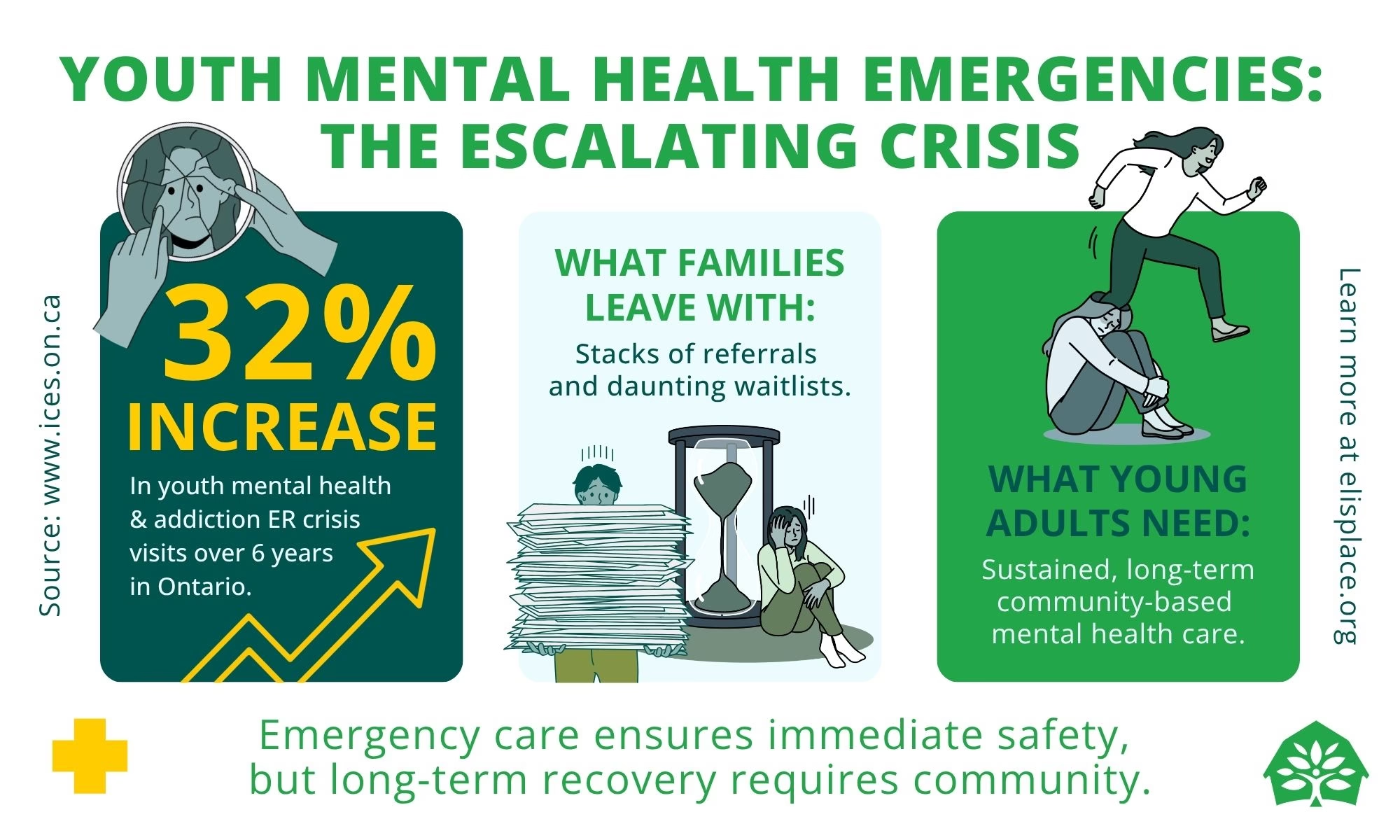
Ontario has seen this pressure increase sharply, with mental health and addiction emergency visits among youth rising by 32% over six years. Hospitals are essential during acute moments, but they are not always designed for the longer developmental needs of young adults living with serious mental illness. For families, an emergency visit is rarely the resolution. Often, they leave the hospital with a stack of referrals, returning home to the daunting, ongoing challenge of maintaining safety while waiting for sustained care.
The Discharge Gap: What Happens After the ER?
Leaving the hospital can be a relief, but it can also mark the beginning of a different challenge. Discharge may include referrals, follow-up appointments, medication planning, safety planning, or instructions to connect with community supports. For many people, the hardest part begins after the immediate crisis has passed, when the question becomes what recovery is supposed to look like going forward.
A stepped approach to care recognizes that people need different levels of support at different times. Stepped Care 2.0 emphasizes timely access, flexibility, and matching care to a person’s level of need. Timely physician follow-up after a mental health hospital stay is also an important measure of continuity, because recovery depends on what happens after someone leaves the hospital.
A hospital can help keep someone safe during mental health emergencies. Recovery asks something different. It takes time to rebuild self-trust, return to routine, and begin participating in life again. Eli’s Place is designed for the next stage of recovery, with a community-based therapeutic model that brings together meaningful work, peer connection, clinical support, routine, and a sense of belonging.
Beyond the ER: Building Connected Crisis Support
Ontario hospitals and system partners are working to improve how people move between emergency care and ongoing support. Efforts to strengthen the mental health and addictions care continuum reflect a growing recognition that better transitions can reduce pressure on hospitals and improve what patients experience after a crisis.
Some hospitals are creating spaces specifically designed for mental health emergencies rather than standard ER environments. Michael Garron Hospital’s Psychiatric Emergency Zone was designed to make emergency mental health care safer, calmer, and better suited to the needs of patients and families. Beyond hospital walls, initiatives like the Thriving Minds Hub help extend support before and after crisis moments, giving young people, families, caregivers, and providers a place to find guidance outside the emergency department.
These initiatives are hopeful. They show a system trying to meet people with more than a hospital bed, while also pointing to the same larger truth: crisis care works best when it is integrated with community care.
From Crisis Care to Long-Term Recovery
A stronger mental health system cannot stop at emergency response. Hospitals can create safety in the most urgent moments, but recovery has to continue in everyday life, where a person is learning how to return to routine, rebuild confidence, and be seen as more than the crisis that brought them to care.
This shift is central to putting recovery-oriented practice into action. It is also what Eli’s Place was created to address: filling the vast gap between being medically stabilized and having a life to step back into. A hospital can help someone survive a crisis, but long-term recovery needs time, trust, structure, and community. For young adults living with serious mental illness, that next stage is not separate from treatment. It is an essential part of recovery itself.

Eli’s Place Communications Team
Our Eli’s Place blogs are developed & written by the Eli’s Place Editorial Team — a collaboration between staff and volunteers committed to raising awareness about serious mental illness in Canada. We aim to inform, inspire, and engage with readers who care about mental health and recovery.
- Eli’s Place Communications Team

- Eli’s Place Communications Team

- Eli’s Place Communications Team

- Eli’s Place Communications Team