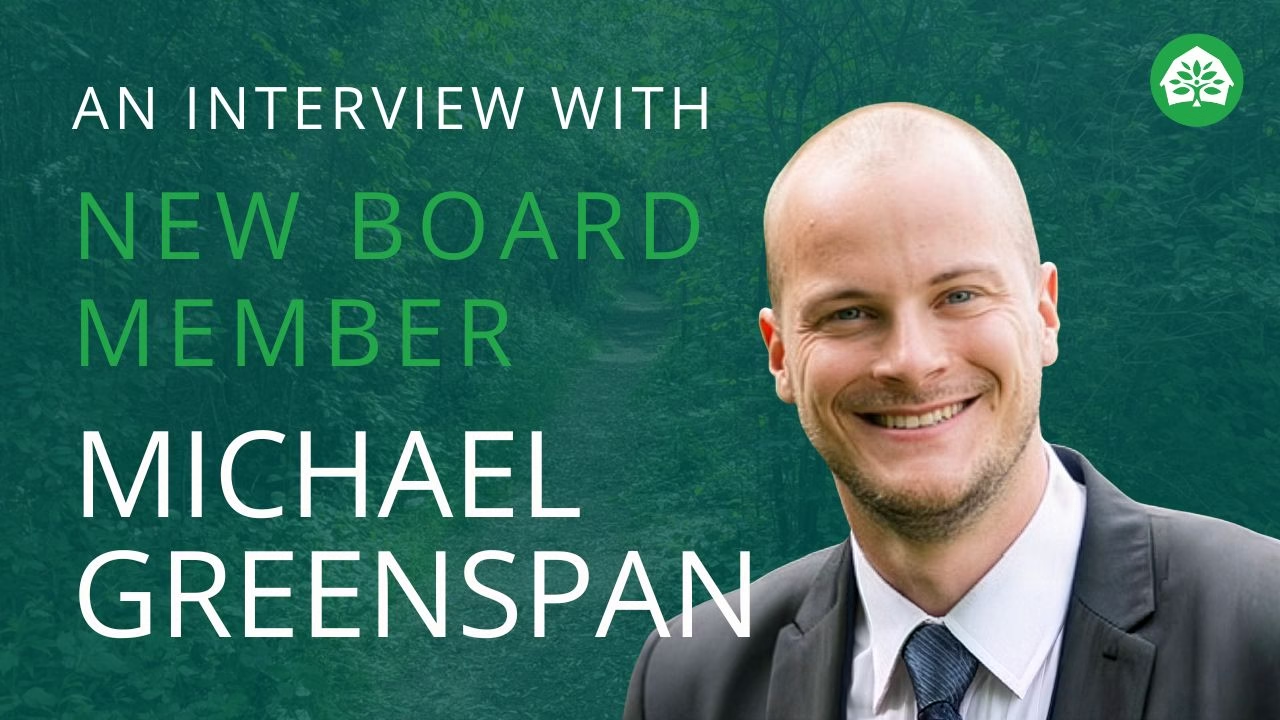
Eli’s Place is thrilled to welcome Mike Greenspan to our Board of Directors. Mike is not only a dedicated mental health advocate but someone who speaks openly and courageously about his own lived experience. His honesty, insight, and community involvement bring an invaluable perspective to our mission and to the future of Eli’s Place. It was a pleasure to sit down with him and hear more about his journey.

Before There Were Words for It
Long before he had the language to describe it, Mike knew something felt different. Mike recalls that early on in his life, mental health wasn’t openly discussed in the media or taught at school. Even without the words for what he was feeling, he recognized early signs that something was going on beneath the surface. Like so many young people, he did what he could to push through, hoping things would simply get better with time.
A Maze Without a Map
When Mike reached university, the pressure and pace intensified everything he had been feeling for years. He reached out for help and remembers the compassion of many of the professionals he spoke to. Despite their kindness, he found himself on a long and confusing path; one marked by multiple inaccurate diagnoses and treatments that didn’t fully match his symptoms. Instead of clarity, each step seemed to raise more questions.
A Diagnosis, A Doorway – But Not Yet a Path
It wasn’t until Mike entered a short-term residential program that he finally received a diagnosis that made sense: Obsessive-Compulsive Disorder (OCD). For the first time, he had a name that reflected his lived experience. Despite the relief, another challenge quickly emerged.
The residential program couldn’t offer the specialized treatment OCD requires – Exposure and Response Prevention (ERP) therapy. Receiving the right diagnosis but not the right care was a pivotal moment for Mike. It showed him the gaps that exist in the mental health system, even when someone manages to access services.
After leaving the program early, Mike applied to the Frederick Thompson Anxiety Disorders Centre at Sunnybrook. It is the only residential OCD program in Canada with comprehensive long-term aftercare. Like so many other specialized programs, the wait period had its challenges. After receiving outpatient services at the Thompson Centre, Mike spent roughly a year and a half on the waitlist for the intensive residential program. By the time the call came, COVID-19 had shifted the program to a virtual format. Even so, the opening felt like the recovery opportunity he had been searching for.
Community as Medicine
Reflecting on his time in the program, Mike speaks highly of the specialized ERP therapy and the clinicians who supported him with such expertise and care. The structure and the therapeutic approach were all instrumental but what stood out most was the long-term aftercare. It provided the continuity and community he needed to maintain progress and build confidence in everyday life.
As part of aftercare, Mike also connected with a peer support group that helped him stay grounded in his recovery. He became a peer support volunteer to alumni of the program and people on the wait-list, a position he still holds today. That same group would later become the pathway that introduced him to Eli’s Place.
Throughout this period, Mike also leaned heavily on the support of his family and close friends. Their encouragement and presence helped him navigate some of the most challenging moments of his recovery. Their support reinforced just how crucial community can be in healing, a value that immediately resonated with him when he learned about Eli’s Place.
Why Eli’s Place Feels Like Home
The more he learned, the more he felt connected to Eli’s Place and its vision for long-term, rural, residential care. The focus on long-term, ongoing care is the exact kind of environment he wishes had existed when he needed it most.
He originally joined us on the Fundraising Committee in 2023 and acted as a team captain for the TCS Waterfront run this past October. For Mike, Eli’s Place represents hope, structure, and the chance for young adults to heal in a setting that feels safe, consistent, and community-oriented.
Joining the Board feels like a meaningful way to give back to a system he has spent years navigating and one he knows can be transformative, but also deeply challenging without the right support.
Looking Forward: A Future Built on Hope
When Mike imagines Eli’s Place five years from now, he sees more than a program, he sees a national model. A place where youth can access specialized, long-term support without waiting years. A place that prioritizes recovery, connection, and life skills. A place that fills one of the largest gaps in the Canadian mental health landscape.
Most importantly, he hopes future young adults won’t have to fight as hard or wait as long as he did to find the care they need.
As Mike often reminds himself and those he supports:
“The biggest risk of all is never trying to get better.”
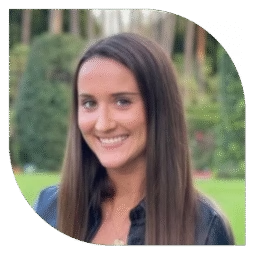
Emma Little | Eli’s Place Peer Advisor
“I’ve chosen to volunteer with Eli’s Place because I wanted to ensure young people had a voice in the development of the program, and more importantly, I believe that Eli’s Place is going to transform the mental health system for young adults in Canada.”
Emma Little graduated with her Master of Social Work from the University of Southern California in 2022. Her focus was on Social Change and Innovation. She is working at the Children’s Aid Society of Toronto as an Organizational Development Specialist.
- Emma Little | Eli’s Place Peer Advisor
- Emma Little | Eli’s Place Peer Advisor

- Emma Little | Eli’s Place Peer Advisor