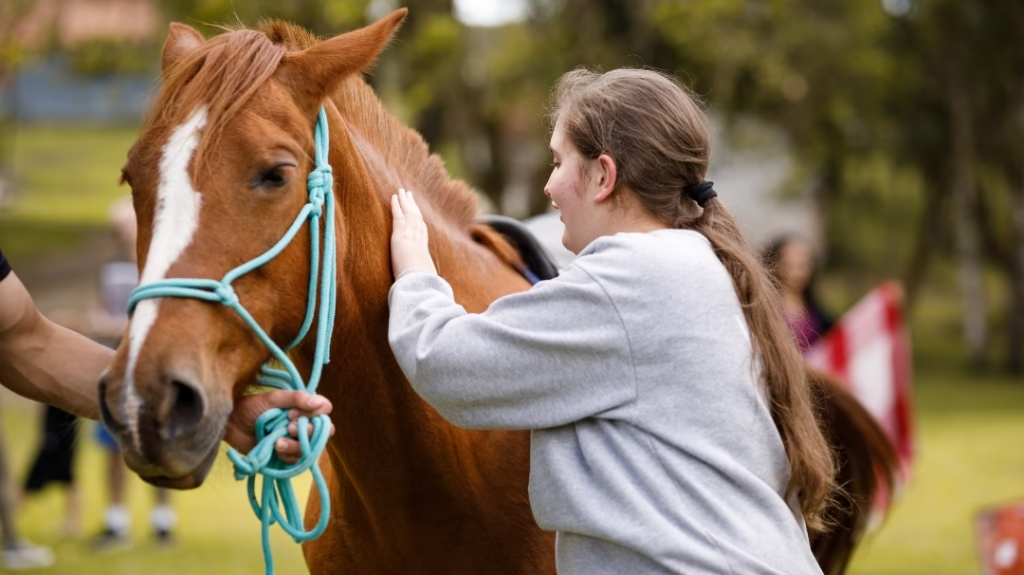
Animal and nature therapy offers a different way to think about mental health recovery. Healing from serious mental illness doesn’t only happen in therapy sessions or hospitals. It also happens while building routines, caring for others, spending time outdoors, and reconnecting with everyday life.
These therapies are not a replacement for medication, psychotherapy, or crisis care. However, they support parts of recovery that happen beyond clinical appointments: rebuilding routine, restoring confidence, forming relationships, and reconnecting with daily life. For young people, those experiences can be especially important when mental illness has interrupted school, work, independence, and identity.
The impact of nature on mental health includes reduced stress, improved mood, and psychological restoration. Among Canadian adolescents, higher levels of outdoor physical activity have also been associated with better mental health, life satisfaction, and happiness. Nature-connected care is not a replacement for treatment. It is part of a holistic recovery system where people begin rebuilding stability, responsibility, connection, and participation in life.

The Human-Nature Connection (Biophilia)
A foundation for understanding these approaches is biophilia, the idea that people have an inherent tendency to seek connection with living things and natural environments. This human attraction to nature, plants, and animals helps explain why a garden, woodland, shoreline, or animal feels grounding rather than incidental.
That connection matters because recovery is not only cognitive or clinical. Animal and nature therapy incorporates natural settings rather than relying solely on treatment rooms or institutional spaces. They create opportunities for observation and participation without requiring every life experience to begin with directed conversation. For someone who feels overwhelmed or defined by clinical treatment, being in nature can make reconnection feel more gradual, less pressured, and more possible.
Animal and Nature Therapy: Why Young Adults Need Holistic Support
Young adulthood is often when people establish independence, education, careers, and long-term relationships. When serious mental illness interrupts these milestones, recovery often requires rebuilding practical life skills alongside clinical treatment. Lack of long-term residential mental healthcare for young adults in Ontario leaves families trying to bridge the distance between crisis stabilization and effective life recovery with limited therapeutic options.
Short-term care can reduce immediate risk, but it may not provide enough to restore confidence or reconnect with community. A person can be medically stable and still feel unable to return to school, sustain work, or manage daily responsibilities. Recovery cannot be measured only by whether a crisis has ended.
Recovery also benefits from a growth mindset — the understanding that abilities can develop through support, reflection, and repeated practice. Animal and nature therapy fit this philosophy because they create real situations in which patience, confidence, and participation can be rebuilt over time.
The Science of the “Farm-Based” Therapeutic Model
A farm-based therapeutic model brings clinical care together with ordinary demands of community life. At Eli’s Place, the therapeutic model combines long-term residential care, meaningful work, peer connection, and structured daily living. Farming, gardening, animal care, and land stewardship become part of how Guests develop practical life skills and contribute to the shared community and environment.
This work provides immediate, tangible feedback. An animal must be fed consistently. A garden requires planning, tending and patience. A shared task depends on communication and follow-through. These responsibilities strengthen self-efficacy because progress is visible and participation has a clear purpose. The value lies in allowing people to earn and experience themselves as capable and dependable.
Land-Based Healing: A Cultural and Communal Path
Land-based healing carries meanings extending beyond general nature exposure. Indigenous communities across Northern Canada describe land-based healing as rooted in culture, identity, language, relationships, and knowledge passed through generations. It is not simply an outdoor wellness activity, but rather part of Indigenous leadership, history, or relationship to place.
That distinction matters as more healthcare organizations consider how approaches such as animal and nature therapy support well-being. London Health Sciences Centre’s Nature for Healing initiative creates opportunities for patients and families to experience restorative spaces during care. These initiatives make health settings feel less institutional, while culturally grounded land-based healing remains a respected and effective distinct practice.
Animal-Assisted Therapy (AAT): More Than Just Comfort
Animal-assisted therapy isn’t simply spending time with a friendly animal. It can be a structured intervention designed around specific therapeutic goals. Animals support connection in ways that feel less pressured than directed conversation, particularly for people who are anxious or guarded in clinical environments.
The psychological benefits of human-animal relationships include companionship, reduced isolation, emotional support, and greater social engagement. In formal treatment, animal-assisted psychotherapy uses trained animals alongside qualified professionals to support goals such as emotional regulation, communication, confidence, or participation in care.
The structure matters. Animal-assisted therapy requires planning, appropriate training, and attention to the needs and safety of the person and the animal. Broader animal-assisted interactions may support trust, empathy, stress reduction, and social connection, but they are not automatically therapy.
For a young adult who sees themselves primarily as a patient, developing a bond with an animal can change that. They are noticing, responding, and becoming responsible for another living being, reinforcing a sense of capability and contribution.
Stepping Outside to Heal with Nature Therapy
Nature therapy, sometimes called ecotherapy, builds on this same understanding by intentionally incorporating the natural world into mental health support. It may include outdoor counselling, horticultural therapy, conservation work, walking programs, or guided time in green space. The benefits of nature exposure include improved mood, restored attention, lower stress, and stronger self-regulation.
Many of these practices become part of everyday life rather than existing only within formal treatment settings. Ecotherapy can be incorporated into routines through gardening, walking with another person, studying outside, or participating in community environmental work. Blue spaces, including lakes, rivers, ponds, and shorelines, also encourage movement, reflection, and social connection.
A walk or garden cannot resolve serious mental illness alone. Their value lies in how they support recovery alongside treatment by making daily life more active, connected, and manageable.
The Future of Canadian Mental Health Care
A stronger mental health system must respond to crises but must also create conditions in which people can build a life after a crisis. Animal and nature therapy points toward a more comprehensive understanding of recovery that includes clinical care while making room for the participant’s contribution, belonging, structure, and time.
Across Canada, PaRx is also integrating nature prescriptions into health care, reflecting growing recognition that health and wellness are shaped by the environments people access. The future of mental health care will still require skilled clinical treatment. However, animal and nature therapy can help create contexts where recovery continues. Through rebuilding confidence, relationships, purpose, and everyday life beyond illness, young adults move forward with hope.
Eli’s Place is working toward a model that incorporates animal and nature therapy with plans for a long-term therapeutic community near Guelph. Programs will integrate farm-based work, gardening, conservation, and community living with professional support. Nature is not a nonessential. It is part of the therapeutic environment designed to help young adults practice living, working, relating, and growing within a community.

Eli’s Place Communications Team
Eli’s Place blogs are developed & written by the Eli’s Place Editorial Team — a collaboration between staff and volunteers committed to raising awareness about serious mental illness in Canada. We aim to inform, inspire, and engage with readers.
- Eli’s Place Communications Team
- Eli’s Place Communications Team
- Eli’s Place Communications Team

- Eli’s Place Communications Team